Ideas / Illustrative concept
An oral history recording studio
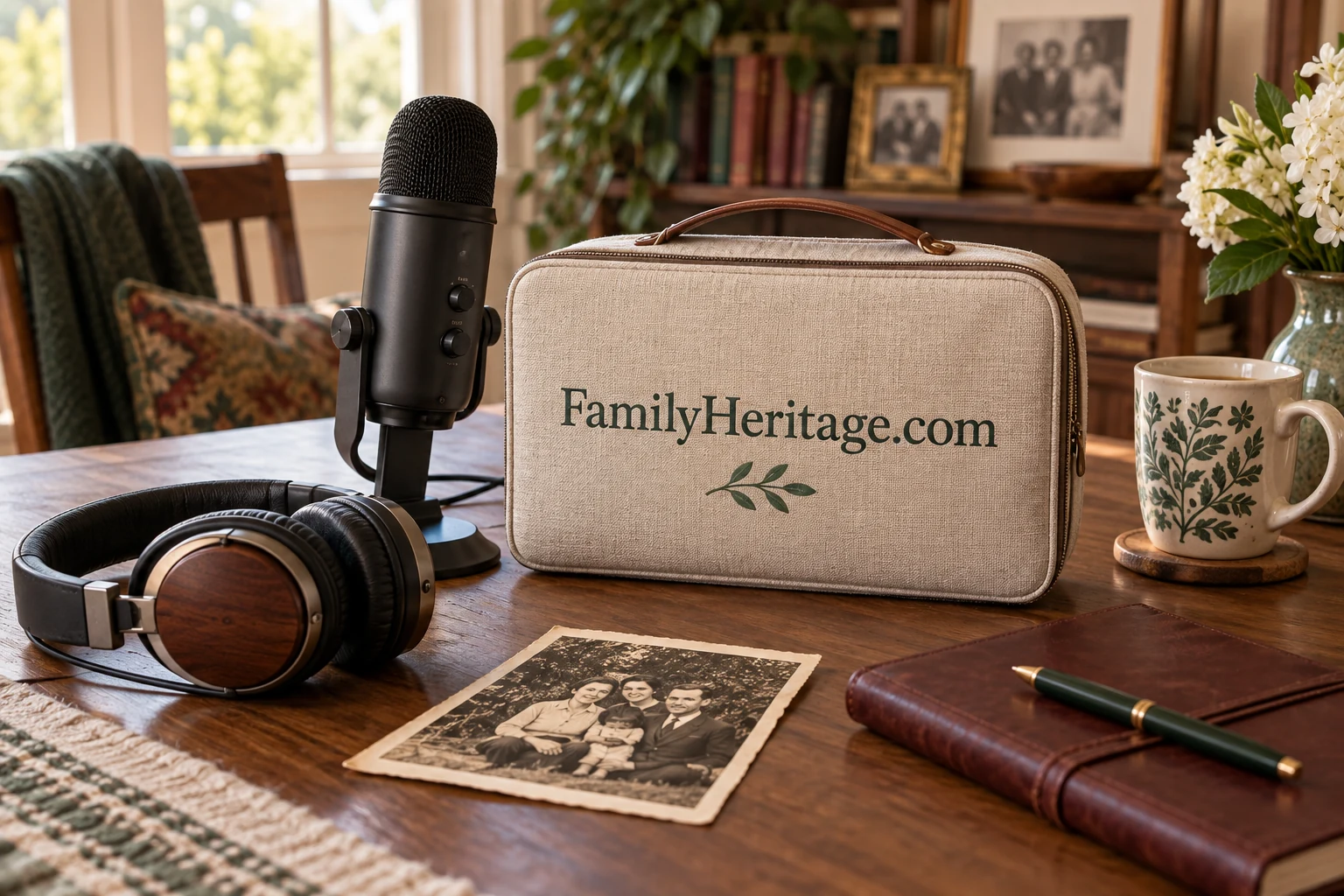
A family may know the outline of a relative's life without having heard the stories in that person's own voice. An oral history recording service could help people make time for that conversation and leave with something they can revisit. FamilyHeritage.com would fit a studio whose offer centers on preparation, attentive interviewing and a clear handover of the recording.
This illustrative concept starts with one speaker and one carefully bounded session. The customer might be an adult child arranging a recording as a gift, but the speaker must have a direct say in the project. The person being interviewed decides what they want to share and who should hear it, even when someone else pays.
Sell a considered session
The first package could include a preparation call, a recorded conversation, an edited listening copy and a transcript reviewed for obvious errors. The operator should specify the session length, the number of review rounds and the files supplied at completion. A family should be able to picture the finished result before choosing extras such as a longer series or a printed companion.
A preparation call would establish a comfortable topic. Rather than trying to cover an entire life, a speaker might choose the years spent in a first home, a family shop or a particular migration. The interviewer could ask for a handful of photographs to use as prompts. Those materials should help the speaker orient the conversation, while leaving room for an unexpected memory.
The Oral History Association's best practices emphasize informed consent, project expectations and opportunities for review. A commercial family service would need to translate those principles into a process people can understand before recording starts. The scope of use should be discussed directly with the speaker.
Keep the speaker involved
The customer and the narrator may have different expectations. The person paying could want a public tribute, while the narrator may want a recording shared only with close relatives. The service should resolve that difference before the session. The interviewer also needs a clear way to pause, skip a subject or mark a passage for later discussion.
An illustrative first session might explore a family bakery. The interviewer begins with the room: where the counter stood, what arrived early in the morning and who usually opened the door. A photograph prompts a description of one busy holiday. Those concrete details can lead naturally toward the people and decisions that made the place important, without demanding a polished speech.
Afterward, the speaker receives a review copy through an agreed channel. They can flag a name, ask to remove a passage or identify a section that needs context. The business must budget for that review and explain how edits are handled. A transcript is useful for finding a passage, but it can miss tone and may introduce errors, so the audio should remain part of the handover.
Build the craft into the operation
The operator needs interviewing ability as well as recording equipment. A quiet room, a tested microphone and a backup recording plan can reduce avoidable failures. Staff should practice asking a single question, allowing a pause and following the speaker's thread. A long list of questions is less useful if the interviewer rushes past the answer.
Scheduling also deserves attention. Some people prefer a shorter morning session. Others may need a familiar person nearby or a break during the conversation. The booking process should invite practical preferences without making assumptions about a speaker's age or ability. Travel, setup and transcription time all need to be included when evaluating the cost of a package.
The association's participant guidance can help the team consider the project from the narrator's side. It is a useful reference when writing the preparation material. The business would still need appropriate agreements and a clear policy for recordings, copies, access and retention.
Reach people at the right moment
One distribution path would be working with family photographers and personal historians. A photographer preparing a milestone portrait may meet customers interested in preserving a voice alongside the image. A personal historian may want a recording partner for a larger project. A small pilot could test those introductions using one defined package and a sample recording made with explicit permission.
A referral relationship should say who books the work, who communicates with the speaker and who receives the finished files. The studio should avoid allowing a partner to promise an outcome it cannot deliver. Examples on the website would require their own publication permission, and the sample should reflect the style customers can expect from the actual service.
The early measure of success could be whether the speaker felt prepared, the family understood the handover and the promised files were usable. Repeat projects may follow when a family wants another chapter or another relative, but that possibility should be tested rather than built into a financial forecast as a certainty.
Give the recording a future
The closing handover could include clearly named audio files, a transcript, a short contents list and instructions explaining which copy is intended for listening. The family should know whether the studio retains a backup and for how long. The business needs a practical method for fulfilling those commitments as its collection of client recordings grows.
A buyer interested in this direction can begin with the service they would offer and the people who would deliver it. An acquisition inquiry about FamilyHeritage.com could describe an existing recording practice, a new family interview service or a partnership bringing those skills together. The domain would provide the address; the care of the conversation would be the work of the future business.