Journal / Family guides
How to organize your family photographs
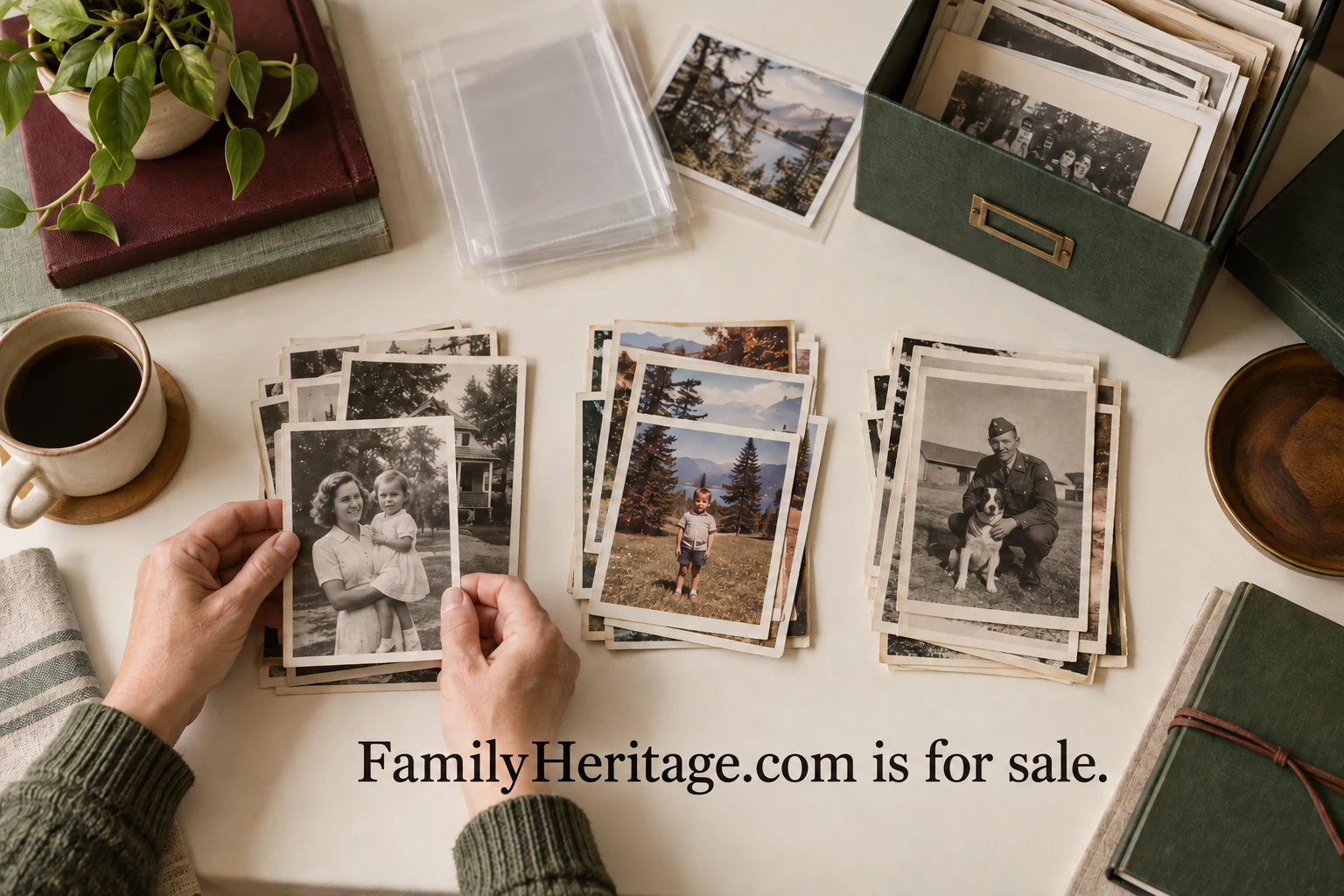
A box of family photographs does not need to become a perfect archive in one weekend. The first result can be small: you know what is in one part of the collection, you can find it again and you have kept the information that arrived with it. That gives the next sorting session a starting point instead of another pile.
This guide is for a household collection of loose prints and ordinary albums. It offers an organizing method, with preservation references where handling decisions matter. If photographs are stuck together, show mold or appear seriously damaged, pause before separating or cleaning them and seek advice from a qualified conservator. The sorting plan can continue with other material while those items wait.
Choose a finish line for today
Pick one box, one album or a single group from one relative. Write down what you intend to complete: perhaps an inventory and a first set of names. Avoid opening every container at once. The more groups you spread across a room, the easier it becomes to lose the original order or mix material that came from different people.
Set up a clean, clear surface with enough room for the selected group and a separate place for notes. Keep food and drinks elsewhere. The Library of Congress photograph care guide explains why the materials and condition of a photograph affect how it should be handled and stored. Use that guidance to choose suitable enclosures and avoid improvised treatments.
Before moving anything, photograph the box as you found it. Capture labels, dividers and any notes tucked inside. An envelope marked with a place name may supply the only context for the photographs it contains. Give that envelope its own record, even if the paper eventually needs to be stored separately from the pictures.
Record where the group came from
Start a simple collection note. Include who supplied the material, when you received it and what they said about it. Write their explanation in a way that preserves its source: “Received from Aunt Helen; she thought these were taken near the old house.” That is more honest and useful than assigning a location as a certainty.
Give the group an identifier such as FH-001. Then number items within it, starting with FH-001-001. The exact pattern is less important than using it consistently and keeping it separate from a guess about the date. An identifier should continue to work if new information changes the caption.
You can keep the inventory in a spreadsheet, a notebook or a simple document. Use one row or entry per item. Begin with the identifier, a short description, the source group and the physical location. Add names and dates as they become available. A system you can maintain is more useful than a complicated catalog abandoned halfway through the box.
Sort lightly before sorting deeply
Make broad groups that are easy to reverse. You might use known household, known event and unidentified. Preserve an album's sequence while you record it; the order may reveal relationships between pictures. Avoid immediately combining photographs from different sources just because they appear to show the same person.
Set aside duplicates as a group for later review. Similar prints can carry different writing on the back or show slightly different crops. Keep both until you have checked those details. If you later decide to reduce duplicates, record where the retained copy lives so another relative can find it.
For an unknown group, resist the temptation to create a story from clothing or scenery alone. You can note visible clues without treating them as proof. “Three people beside a car; building number 18 visible” gives another person something to work with. A confident but unsupported caption can be surprisingly difficult to correct once it has been shared.
Capture both sides and the surrounding clues
When making a digital reference copy, include the back if it contains writing, a studio mark or other information. Use related filenames such as FH-001-001-front and FH-001-001-back. Keep a note if a caption appears to have been added later or if you cannot identify the writer.
The Library of Congress digitization guidance is helpful when deciding how to support material during imaging. A bound album should not be forced flat to fit a scanner. If a page cannot be captured safely with the equipment available, leave it in place and arrange a more suitable method.
Check a few files at full size before continuing through the batch. Can you read the handwriting? Is the whole print visible? Does the file open after it has been copied to the intended folder? A quick inspection now can prevent repeating an entire session because the first settings or camera position were unsuitable.
Ask relatives questions they can answer
Send a small group of numbered reference images to someone who may recognize them. A message with five pictures and three specific questions is easier to respond to than a folder containing hundreds. Ask who is shown, what place they recognize and how certain they are. Include an easy way to say “I don't know.”
Record the contributor's name beside the answer. If two relatives disagree, keep both accounts until there is more evidence. For example, one may remember a wedding in 1968 while another identifies a child who was born later. The disagreement is useful information, and the inventory can hold it without forcing an immediate choice.
Before sharing widely, consider whether the photographs or captions include details a living person would prefer to keep within a smaller group. Ask the relevant people about the intended audience. A family chat, a printed book and a public website are different uses, so a previous informal share should not automatically decide the next one.
Give originals and files clear homes
Choose a physical location you can describe precisely: cabinet two, box one, folder three. Put that location in the inventory. Keep the materials together in suitable storage and retain a record of any moves. The purpose is simple: someone reading the inventory should be able to retrieve the original without opening every box.
For digital copies, separate untouched capture files from versions edited for sharing. Use folders with plain names and include a short read-me document explaining the identifiers and inventory. Save additional copies in separate locations, then check that they can actually be opened. Revisit the collection periodically rather than assuming a single copy will remain available indefinitely.
Finish the session with a brief progress note: twenty prints inventoried, fourteen identified, six awaiting a reply, originals in box one. That note makes it easier to resume and lets another family member help. Put the remaining material away before starting the next group. A series of completed small batches can become a useful family collection, with its context still attached.
A small example to copy
Your first entry might read: “FH-001-001, four people outside a brick house, supplied by Helen, approximate date unknown, front and back captured, original in box one.” After a relative replies, add: “House identified as Cedar Street by Paul, September 2026; people not yet confirmed.” The entry remains useful at both stages. You have made progress without waiting for every question to be answered.